
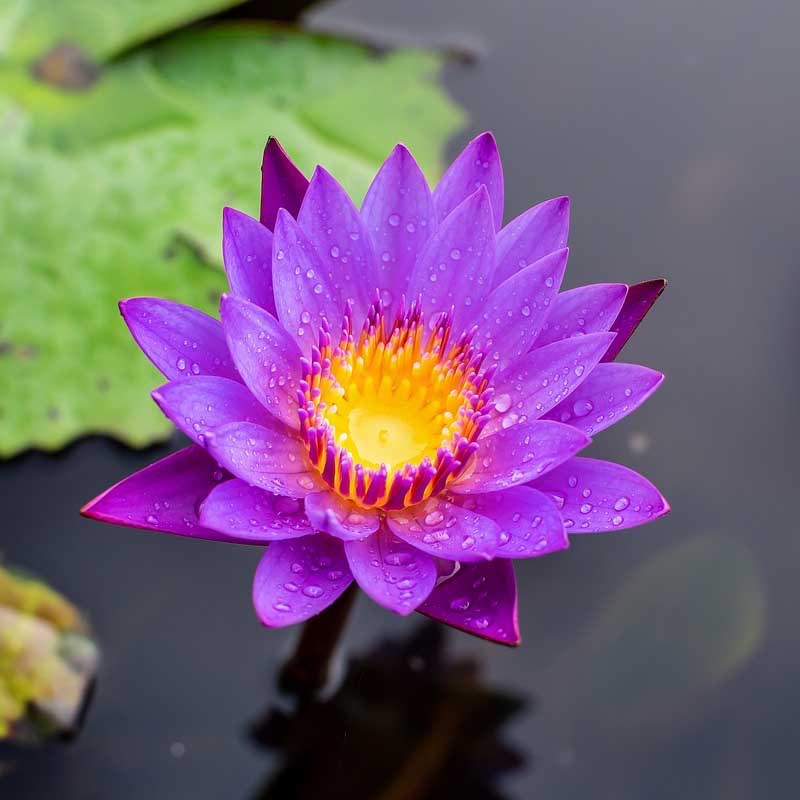
Blue Lotus Absolute is a particularly interesting example of why knowing the chemistry of an aromatic material matters. What we may expect a botanical to smell like and what the plant actually gives us are not always the same, and Blue Lotus illustrates this beautifully. Below is detail on what I call, "The Blue Lotus Conundrum", followed by two Blue Lotus analyses: one authentic and one commercial.
True Nymphea cerulea Absolute contains two hydrocarbons as its main and characteristic components: 6-(Z), 9-(E) Heptadecadiene and 8-Heptadecene, both with 17 carbon atoms. Apparently these molecules do not originate from Terpene synthesis but from the lipid metabolism. Given that these components resemble the structures of unsaturated fats, they impart the absolute with a slightly fatty note.
However, if one is not familiar with the absolute, one might expect a perfume-like fragrance. The fragrance of the Lotus absolute is highly refined, just very different from what one might expect. These differences in expectation are even visible in analyses made from ‘composed’ Blue Lotus and the real absolute.
The analytical data below under the heading: "Commercial Blue Lotus Analysis" are from an expensive store-bought “Blue Lotus”, where the buyer was assured of purity and identity of the absolute. It smelled very nice, basically like an accomplished perfume. However, it is almost amusing how plenty of synthetic fragrance materials are identified in the concocted oil. These components are so common that even their trade names such as SYVERTAL IFF, FLORALOZONE or LYRAL are listed in the computerized library of the GC/MS.
The analysis of an authentic Lotus absolute sample is also presented below under the heading: "Authentic Blue Lotus Analysis". This example is not presented to accuse anyone of selling fake Blue Lotus, but to illustrate the different philosophies at work. The composition represented by this analysis could be considered a technically correct perfume, however it does not even attempt to imitate the fragrance of the real Nymphea cerulea. Clearly the subtle and unobtrusive fragrance of the Lotus was simply not spectacular enough, so a perfumer's fantasy set out to create a representation of what we associate, consciously and maybe even more so subconsciously with the idea of Lotus.
Hydroxy methyl pentyl cyclohexen carboxaldehyd
Hydroxy methyl pentyl cyclohexen carboxaldehyd is a synthetic fragrance known by the trade names Lyral, Kovanol, Mugonal, or Landolal. It is found in soaps, Eau de Toilettes, aftershaves, and deodorants.
Formula C13H22O2 Density: 995.00 kg/m3
Blue Lotus Abasolt GC/MS Link


Share:
Characteristics of some less common essential oils
Helichrysum/Everlasting Hydrosol